Bulletin No. 20 (194) 2026
November 23, 2026Putin Seeks Security Bargain; Ukraine Strikes Crimean Bridge; CSTO Restricts Armenia; Business Resists Tax Hikes; Pardon Tests Putin
OVERVIEW OF KEY TRENDS
IN FOCUS
Diplomatic Manoeuvring and the War Against Ukraine
The Putin–Trump–Xi Meeting
The Meetings in Abu-Dhabi
Moscow’s European Security Position
The Future of Ukraine
European Participation
SIGNIFICANT DEVELOPMENTS
Ukraine Strikes the Crimean Bridge
The CSTO Summit
The Armenia Factor
Military and Security Agenda
Political Issues
Tax Resistance
The Lerchek Pardon: Putin Shows Vulnerability
INDICATORS
Uneven Growth in Payments
Russian Businesses Underestimate Weather Risks
Russians’ Anxiety Rises Again
R.Politik RECOMMENDS
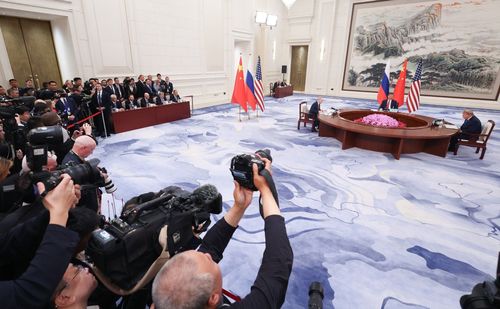
Kremlin.ru
Brief presentation
The Abu Dhabi talks have brought Moscow’s demands for binding constraints on NATO into negotiations over Ukraine’s future. Washington is meanwhile discussing Article 5-style guarantees for Kyiv and seeking Russian agreement to European participation. Moscow is sending mixed signals, maintaining a hardline position while hinting at possible flexibility. We assess Moscow’s reading of the negotiations, the demands behind its leaked “non-paper” and its conditions for European participation. How far might Putin adjust his position? What would make guarantees for Ukraine acceptable to Moscow? And where do territorial concessions and Ukraine’s political future fit into a broader bargain?
SIGNIFICANT DEVELOPMENTS
Ukraine strikes the Crimean Bridge. Beyond the immediate disruption, attacks on an asset closely associated with Putin carry domestic and diplomatic consequences. We examine how these pressures affect Moscow’s calculations and the prospects for further escalation.
The CSTO summit. Moscow’s ambitions for a Eurasian security order confront differing priorities among its allies. We assess the organisation’s evolving role, the handling of Armenia’s membership and the limits of institutional cohesion.
Resistance to higher taxes. Influential business interests are seeking adjustments to the government’s fiscal plans. We examine how lobbying works under wartime conditions, which arguments still carry weight and where the scope for negotiation ends.
The Lerchek pardon. Presidential intervention in a politically sensitive criminal case has reopened questions about justice, elite influence and the reach of the security services. We consider what the handling of the case says about Putin’s relationship with elite discontent and expectations of his protection.
Unlock Full Access
To access this Bulletin, you may either make a one-time purchase or subscribe to the Complete Bulletin Collection for full access.
€180
Only this Bulletin.
Recent Bulletins
Abu Dhabi Peace Talks; Putin Courts Africa; Mishustin Reassigns Cabinet Portfolios; Moscow Eyes Pension Savings; Communists Face Prosecution
Limited Cabinet Reshuffle; Witkoff’s St. Petersburg Visit; Strikes on Data Centres; Divisive Tax Plans; Lesta’s New Owners