Bulletin No. 15 (189) 2026
September 07, 2026Ukraine Diplomacy Meets Escalation; Kremlin Dismantles Yabloko; Decree Expands State Control; Telegram Pressure Deepens; Moniava Case Tests Restraint
OVERVIEW OF KEY TRENDS
IN FOCUS
Ukraine: Between Escalation and New Round of Talks
Russian-American Stagnation
Witkoff-Kushner Diplomatic Manoeuvre
Russian-Ukrainian Escalation
Russian-European Escalation
The Dismantling of Yabloko
Political Presumption
Circumstances Change
A Way Out
Other Parties' Candidates Removed
SIGNIFICANT DEVELOPMENTS
The Temporary Management of Critical Infrastructure
New Pressure on Telegram
The Impact
Confusion among the Elites
The Case of Lida Moniava
New Udmurtia Governor
INDICATORS
An Anxious Future
Business Blues
R.Politik RECOMMENDS
Kremlin.ru
Brief presentation
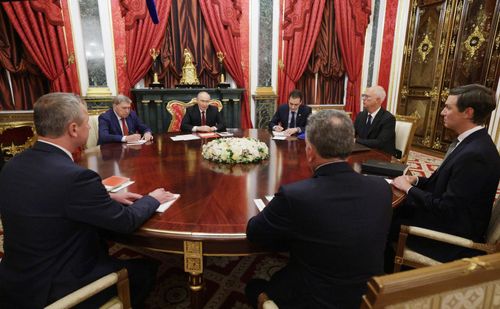
Diplomacy over Ukraine has resumed just as the confrontation is losing its remaining guardrails. The return of Witkoff and Kushner to Moscow followed months of behind-the-scenes work, but it has also brought unresolved tensions within Washington and the fundamental gap between Moscow and Kyiv back into view. Meanwhile, deep strikes, pressure on maritime trade and increasingly direct European involvement are widening the conflict.
We reconstruct what made the diplomatic mission possible and examine the potential settlement framework behind it: which elements may be negotiable, whether earlier understandings still hold and whether the new channel can produce more than another round of trilateral talks.
SIGNIFICANT DEVELOPMENTS
The Dismantling of Yabloko. The party’s removal from the State Duma election rapidly developed into a broader campaign against its candidates. The bulletin examines why a party previously tolerated as a legal anti-war outlet suddenly came to be viewed as a political risk and what the authorities’ uneven handling of the case says about decision-making inside the Kremlin.
Temporary Management of Critical Infrastructure. A new presidential decree allows the state to place vulnerable private assets under temporary management without formally changing their ownership. Its security rationale is clear, but the breadth of the mechanism raises separate questions about wartime costs, corporate vulnerability and the possible uses of temporary control.
Pressure on Telegram. The authorities have designated Pavel Durov an extremist while government bodies, businesses and election managers still rely on Telegram. This contradiction offers a window into competing institutional priorities — and into what may change once the election is over.
The Case of Lida Moniava. The prosecution of one of Russia’s most prominent charity leaders pushes repression into a sector closely connected to state-supported social care. The bulletin considers why the authorities nevertheless chose a less confrontational form of pressure and what the case could mean for civic organisations.
New Udmurtia Governor. A surprise gubernatorial replacement in the middle of the election campaign raises questions about the criteria now shaping Kremlin personnel choices. The case illustrates how war, industrial priorities and tighter resources are changing what Moscow expects from regional leaders.
An Anxious Future and Business Blues. Russians report relative personal stability even as expectations for the country deteriorate, while business sentiment has stabilised at a low level. The latest indicators provide the social and economic context for the political decisions examined throughout the bulletin.
Unlock Full Access
To access this Bulletin, you may either make a one-time purchase or subscribe to the Complete Bulletin Collection for full access.
€180
Only this Bulletin.
Recent Bulletins
Diesel Deal; Budget Prioritises War; Duma And Elite Interests; Krasnov Tightens Judicial Control; FSB Expands Defence Oversight
United Russia Expands Majority; Moscow Targets Western Assets; FSB Faces Elite Resistance; BRICS Reassures Putin; AfD Gains Encourage Moscow